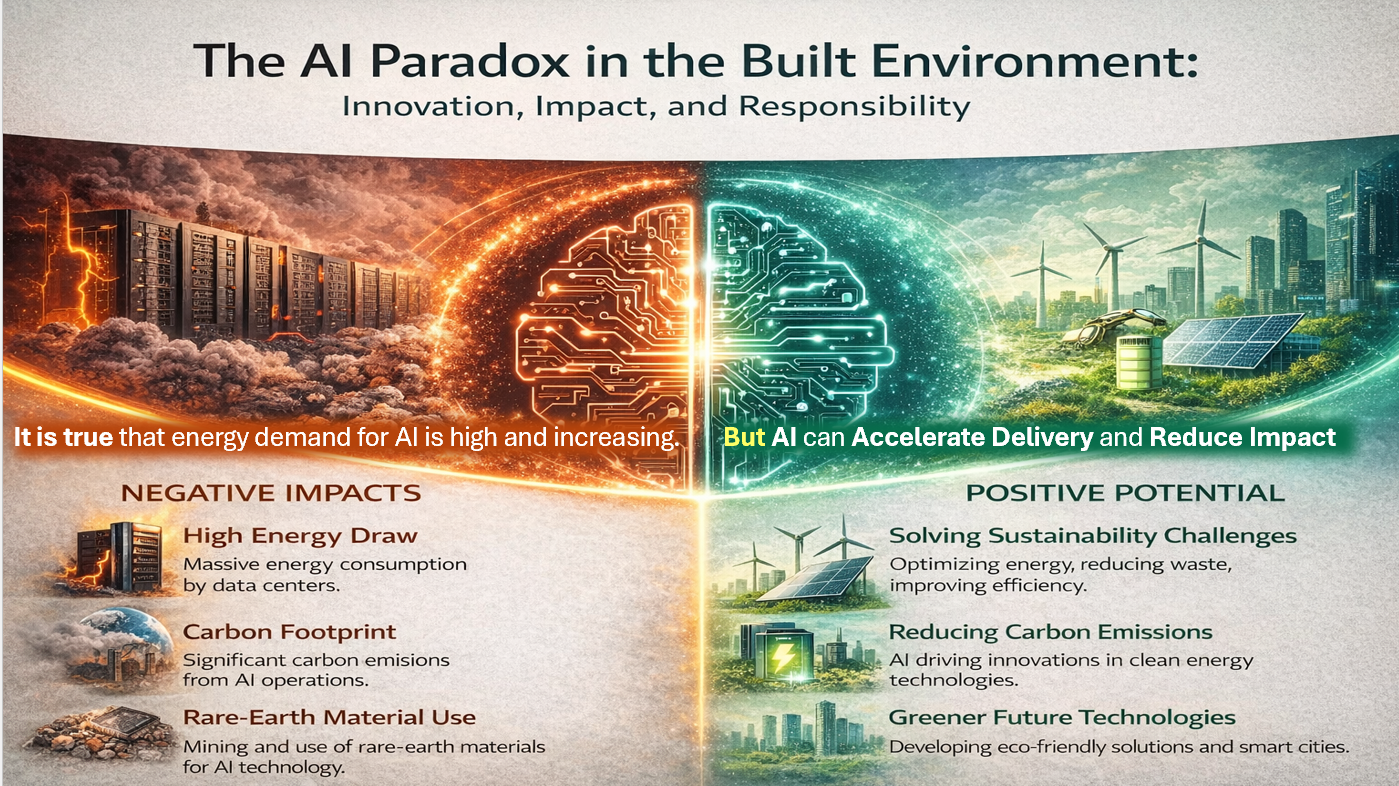
If you’ve been following this blog, or in general have a mature view of project management, you know that sustainability in projects is all about thinking past the end of the project and considering the project’s product in service – and the impacts of that ‘product’ as it operates in the steady state.
Also, if you have been following, well, anything, you know that AI is in just about every news story, and if it isn’t it may even be writing that news story. One news story that caught my attention in light of the relationship between sustainability and AI is this article posted about the great state of Maine.
It opens, “Maine lawmakers passed a statewide freeze on large data centers this week, the first of its kind in the country. If Gov. Janet Mills signs the bill into law, it would impose a moratorium on building data centers that use more than 20 megawatts of power in the state for a year and a half.”
And it’s not just Maine.According to The Hill, “The new Maine ban is part of a larger trend of state legislatures considering bills to impose new restrictions on data centers as the public and experts express concerns about the negative economic and environmental effects of these projects.”
There are many concerns about AI. Privacy, control, jobs, consumption, pollution all are front of mind. I came across this amazing interview between Claude and Bernie Sanders. Whether you are a fan of Bernie Sanders or not – whether you are a fan of AI or not, have a listen to this conversation. It’s mostly about privacy but Sanders and other politicians in the US are wanting a moratorium on data center construction, and it’s not just the US. Here’s a report that says that up to half of the world’s data centers may be delayed.
But I digress. Let’s get back to that conversation between Claude and Bernie.
I was astounded by the ‘frank’ attitude Claude had in ‘admitting’ what is happening with respect to some of these concerns – even though there was one point where there was a giant ‘pregnant pause’ before it answers. See if you can catch that moment.
This post is meant to be thought-provoking.
Many of you may be working on ‘the built environment’ – construction, water systems, even transportation and telecom, which fit in that category. Are you thinking about what impacts the project’s PRODUCT has in the long term? Are you considering ALL of the stakeholders involved – not just the people working on the project, or the sponsors, or the immediate customers, but those who will be affected (in any way) by the result of the project in its steady state.There are cases near my home where a data center construction project has become controversial not because of power consumption or classic ‘pollution’ or water (the usual suspects) but also literal physical noise based on the diesel generators involved in supporting the center.See the story from Boston’s WBUR here.
If this interests you, have a look at this reportwhich concluded that a Virginia data center was projected to contribute up to $99 million in health damages to local residents each year. Please do not get me wrong here. I am not opposed to the development and deployment of AI. As I have posted recently, there are tremendously promising(and proven) contributions that AI can make in the world of reducing carbon emissions and improving social conditions for humans. This is a both/and situation. Or, rather it can be a both/and situation – having the benefits of AI while limiting its downsides – if the proper guardrails are set up, and, importantly, if you as project managers step up as project leaders and raise these concerns early on, and engage with the appropriate stakeholders early on. What are your thoughts here?I am interested in hearing from project managers in the built environment area, especially those involved in data center projects.